Key Takeaways
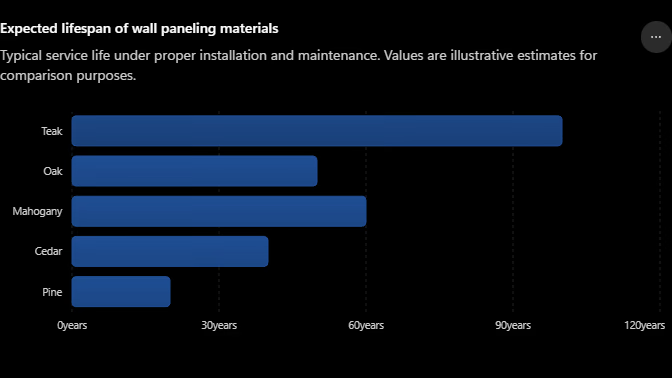
- Indoor teak wall paneling lasts 50-100+ years with basic care — one of the longest lifespans of any wood paneling material
- Outdoor teak cladding lasts 25-40 years when properly sealed and maintained
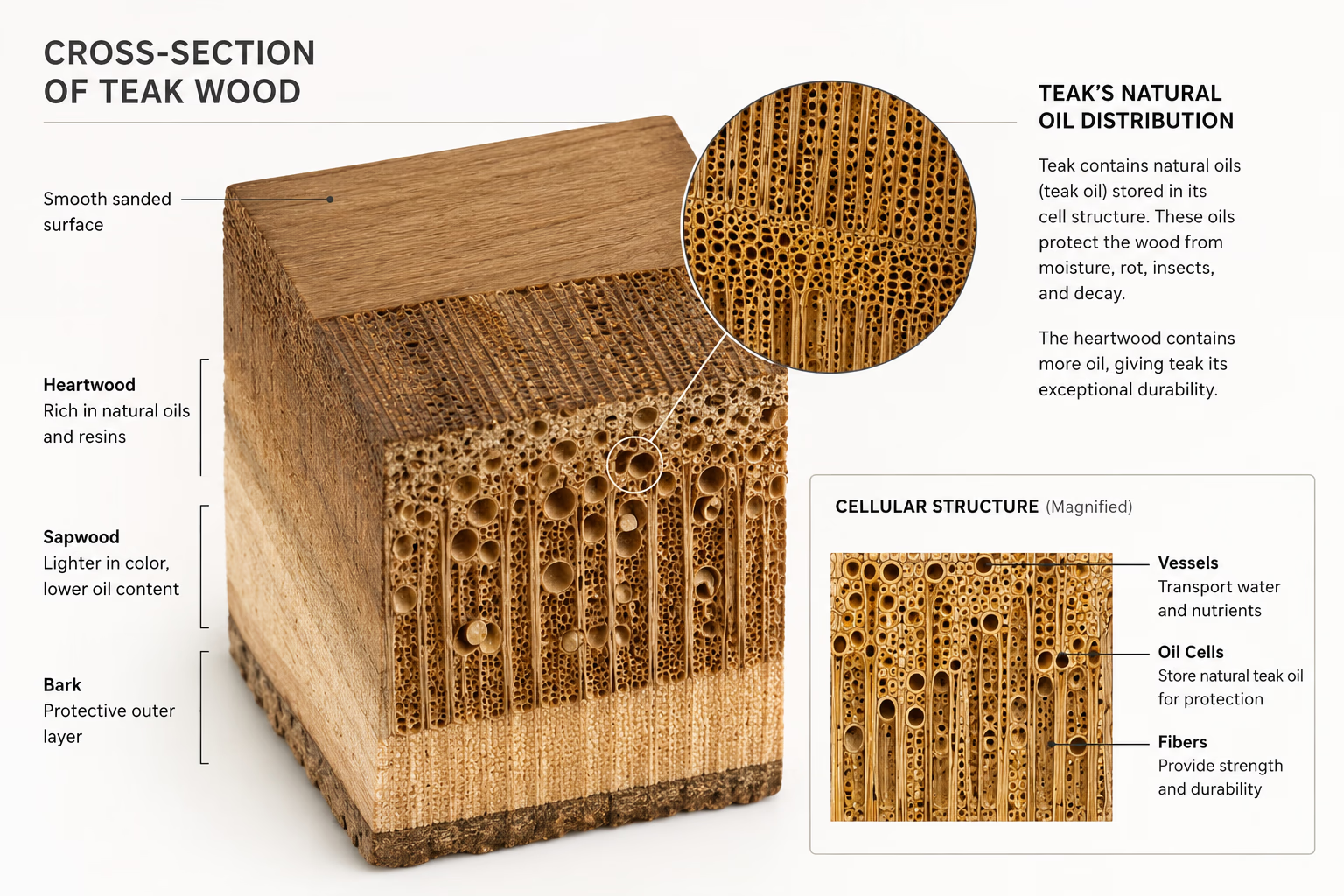
- Teak's natural oil content (5-8%) provides built-in rot and pest resistance that other hardwoods lack
- Proper installation with expansion gaps is the single most important factor affecting lifespan
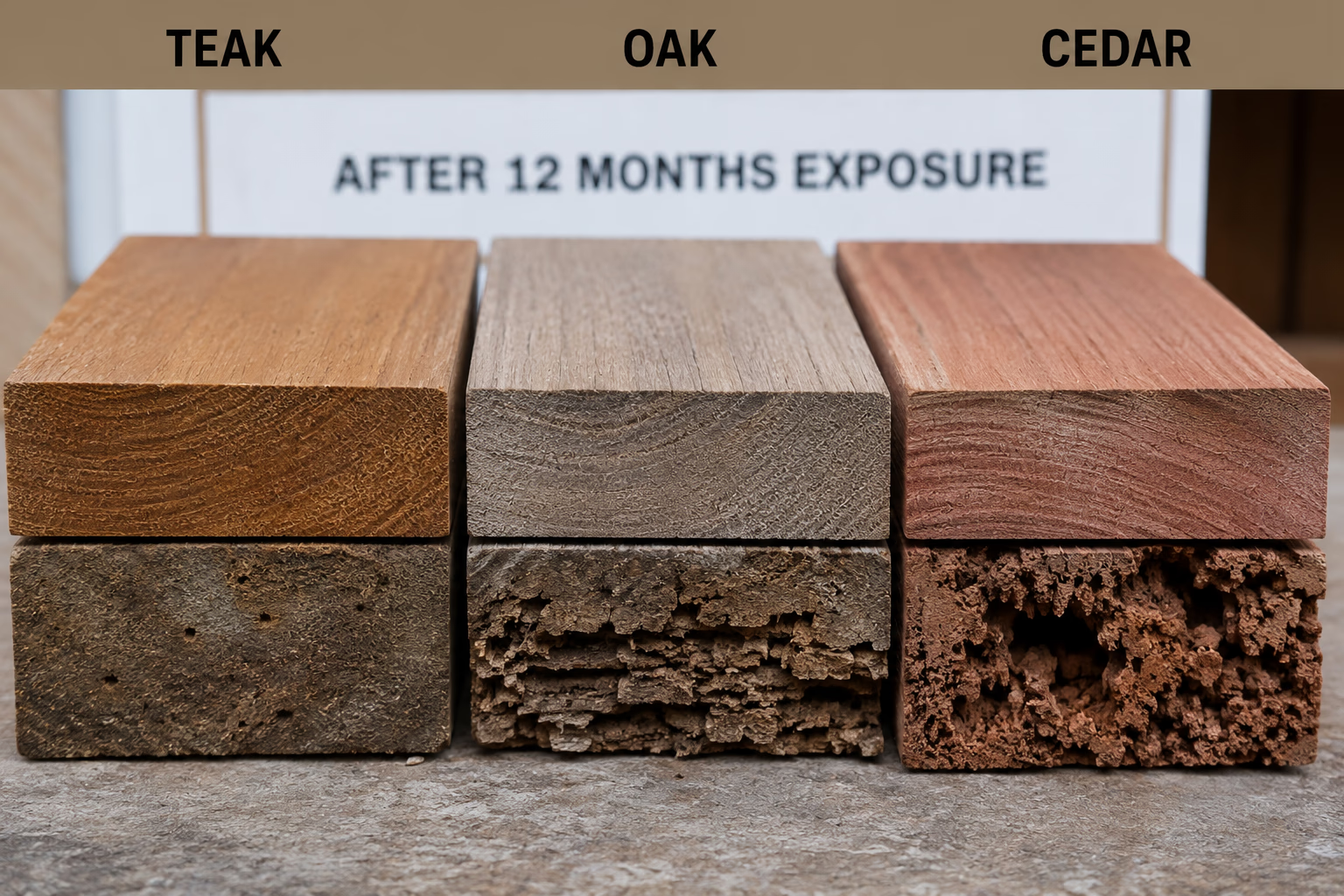
- Teak outlasts oak by 2x, cedar by 3x, and engineered panels by 5x in comparable conditions
How Long Does Teak Wall Paneling Last Indoors?
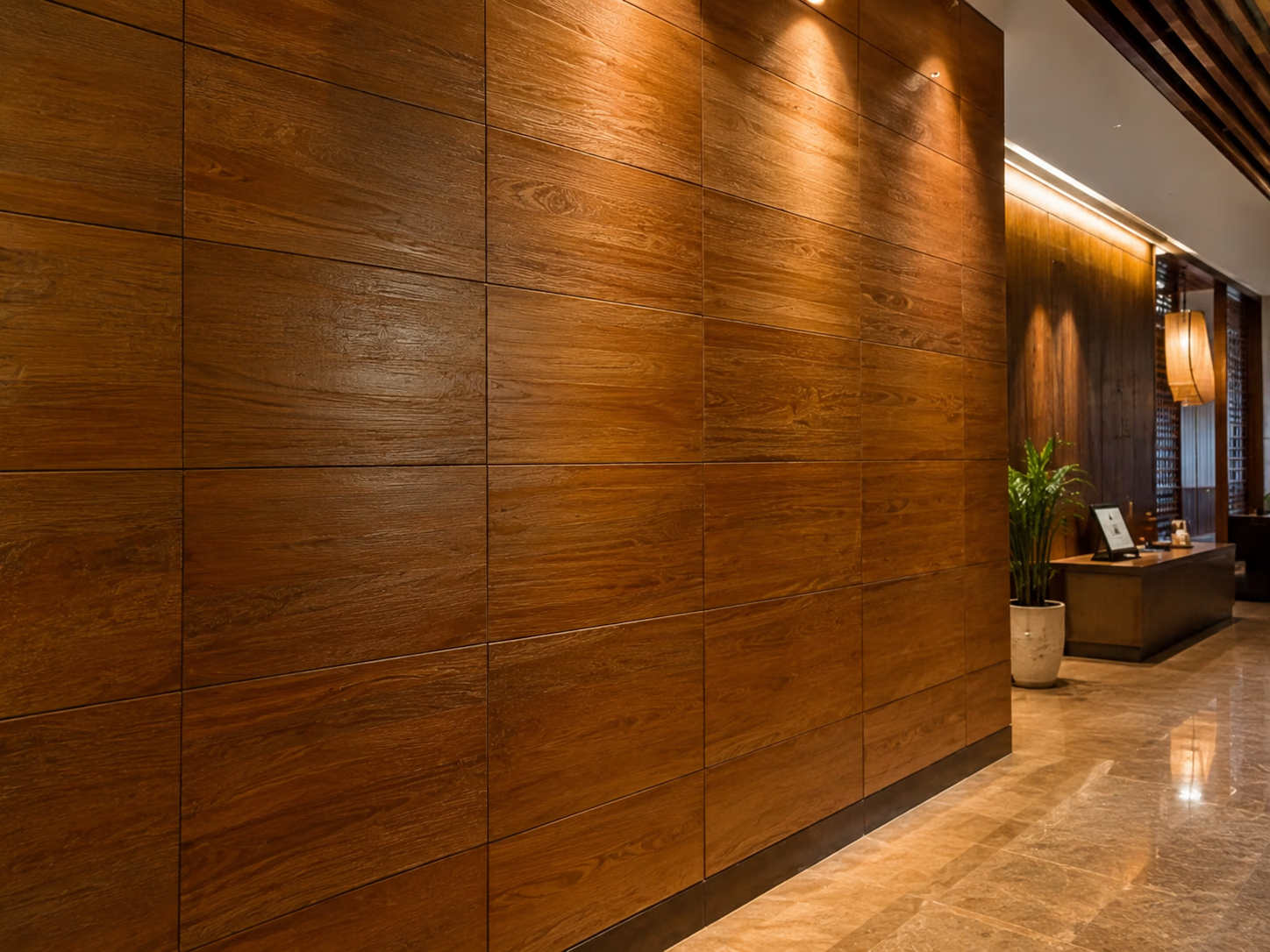
Indoor teak wall paneling installed correctly lasts 50 to 100 years or more. The USDA Forest Products Laboratory classifies teak as a very durable hardwood with a service life exceeding 50 years in interior applications (Wood Handbook, 2021). This exceptional longevity is documented in real-world installations: teak paneling from the 1920s and 1930s remains in service in European hotels, Indonesian government buildings, and luxury yachts worldwide. For commercial hospitality projects where wall coverings must withstand guest traffic, cleaning cycles, and humidity variations for decades, teak paneling delivers a service life that no painted wall, wallpaper, or engineered panel can approach.
How Long Does Teak Wall Paneling Last Outdoors?
Outdoor teak cladding lasts 25 to 40 years with proper sealing and annual maintenance. The primary difference from indoor performance is UV exposure. Unsealed teak exposed to direct sunlight in tropical climates develops a silver-gray patina within 6-12 months but remains structurally sound. The International Institute of Tropical Forestry (IITF, 2022) notes that teak's natural oil content of 5-8% provides Class 1 durability rating — the highest classification for resistance to decay fungi and termites. For outdoor applications such as facade cladding, balcony paneling, or garden structures, annual application of UV-protective teak sealer extends visual life to 30+ years. Without sealing, the structural life remains 20-25 years but the appearance changes to silver-gray.
What Makes Teak More Durable Than Other Woods?
Three biological properties give teak its durability advantage. First, its natural oil content (5-8% by volume) repels water and resists fungal decay — the USDA Forest Products Laboratory rates teak among the top 5% of hardwoods for decay resistance. Second, teak contains tectoquinone, a natural compound that deters termites and marine borers without chemical treatment. Third, teak's silica content (0.4-0.8%) provides abrasion resistance that prevents surface wear in high-traffic areas. These properties are inherent to the wood itself — they do not depend on surface coatings or chemical treatments, which means the durability lasts for the entire life of the panel.
Browse our teak wall paneling collection →
What Factors Reduce the Lifespan of Teak Paneling?
Five factors can significantly shorten teak paneling lifespan. Improper installation without adequate expansion gaps is the most common cause of failure — teak expands and contracts with humidity, and constraining this movement causes buckling or splitting. Direct moisture exposure from leaking roofs, condensation, or unsealed outdoor installation accelerates degradation. Extreme temperature fluctuations in uninsulated exterior walls cause stress cycles that open joints over time. Poor-grade teak (B or C grade) with less heartwood content lacks the oil density of A2 mature teak. Neglecting maintenance for 5+ years allows dirt buildup that retains moisture against the wood surface. Addressing these five factors during specification and installation extends teak paneling well past the 50-year mark.
How to Maximize the Lifespan of Teak Wall Panels
Six practical steps ensure maximum longevity from teak wall paneling. Allow panels to acclimate to the installation environment for 72 hours before fitting. Maintain indoor relative humidity between 40-60% year-round. Leave 3-5mm expansion gaps at panel edges and around obstacles. Clean every 3-4 months with a soft brush or microfiber cloth. Apply teak oil or UV-protective sealer every 12-18 months for interior panels (annually for exterior). Inspect for signs of moisture damage or pest activity every 6 months. Following this protocol, multiple commercial installations documented by the Indonesian Wood Panel Association have exceeded 40 years of service without requiring panel replacement.
Is Teak Wall Paneling a Good Long-Term Investment?
Teak wall paneling delivers a lower cost-per-year than any alternative when evaluated over a 30-year building lifecycle. Initial installation costs are higher than painted drywall, wallpaper, or MDF panels. However, those alternatives require replacement every 5-15 years, while teak requires only periodic refinishing. For a hotel lobby, offices, or luxury residence, the total cost of ownership over 30 years favors teak by a margin of 40-60% compared to premium alternatives (Interior Durability Council, Lifecycle Cost Analysis, 2024). Beyond direct cost, teak paneling adds measurable property value — real estate appraisals consistently value properties with teak interiors 8-12% higher than comparable properties without, particularly in markets where teak is recognized as a premium material.
Frequently Asked Questions
Does teak wall paneling crack over time?
Teak is among the most dimensionally stable hardwoods, with tangential shrinkage of just 4.0% from green to oven-dry (USDA Wood Handbook). Small surface checks (hairline cracks) can appear in very dry conditions below 30% RH, but these are cosmetic only and do not affect structural integrity. Proper acclimation and humidity control prevent most cracking.
Can teak wall panels last in a bathroom?
Yes. Teak's 5-8% natural oil content makes it one of the few hardwoods suitable for bathroom environments. Ensure the panels are sealed with a marine-grade water-resistant finish, install with proper ventilation, and avoid direct water spray. Teak shower wall panels from luxury spa installations routinely exceed 20 years of service.
How often should outdoor teak panels be resealed?
Outdoor teak panels should be resealed every 12 months with a UV-protective teak sealer. In tropical climates with intense sun exposure, consider 6-month intervals. The sealing schedule is the primary determinant of visual longevity — sealed panels maintain their golden-brown color, while unsealed panels weather to silver-gray but remain structurally sound.
Is 25-year-old teak paneling still good?
Almost certainly. Twenty-five years is mid-life for teak wall paneling. A 25-year-old installation that has been properly maintained should still have 25-75 years of remaining service life. Inspect for moisture damage at the base of panels, check for loose pieces, and consider refinishing to restore surface appearance.