Key Takeaways
- Over 80% of Indonesia's teak now comes from certified plantation forests under SVLK legality assurance (Ministry of Environment, 2025)
- Plantation teak reaches harvest maturity in 40-60 years, absorbing CO₂ throughout its growth cycle
- SVLK, FSC, and PEFC are the three certifications that verify legal and sustainable teak sourcing
- Teak's natural durability (50-100 year lifespan) makes it one of the lowest lifetime-carbon wood products available
- Responsible sourcing requires verified chain-of-custody documentation from factory to delivery
What Makes a Hardwood Sustainable in 2026?
In 2026, a hardwood is considered sustainable when it meets three criteria: legal harvest from managed forests, verifiable chain-of-custody certification, and a carbon lifecycle that favors long-term sequestration over short-term replacement. According to the FAO Global Forest Resources Assessment 2025, plantation forests now supply 46% of global industrial roundwood, reducing pressure on natural forests. Teak meets this standard particularly well because its natural durability means products last 50-100 years — far longer than most alternatives — locking carbon in buildings and interiors rather than releasing it through replacement cycles.
Where Does Commercial Teak Actually Come From?
Indonesia supplies approximately 35% of the world's teak, with Myanmar accounting for another 20% and India, Thailand, and various African nations making up the remainder (ITTO Tropical Timber Market Report, 2025). The critical difference is source legality. Indonesian plantation teak operates under the mandatory SVLK certification system, while Myanmar teak has faced international scrutiny due to conflict timber concerns. For architects and specifiers, knowing the country of origin is the first step in verifying sustainability — Indonesian plantation teak with SVLK documentation provides the clearest chain of custody.
Plantation Teak vs Natural Forest Teak
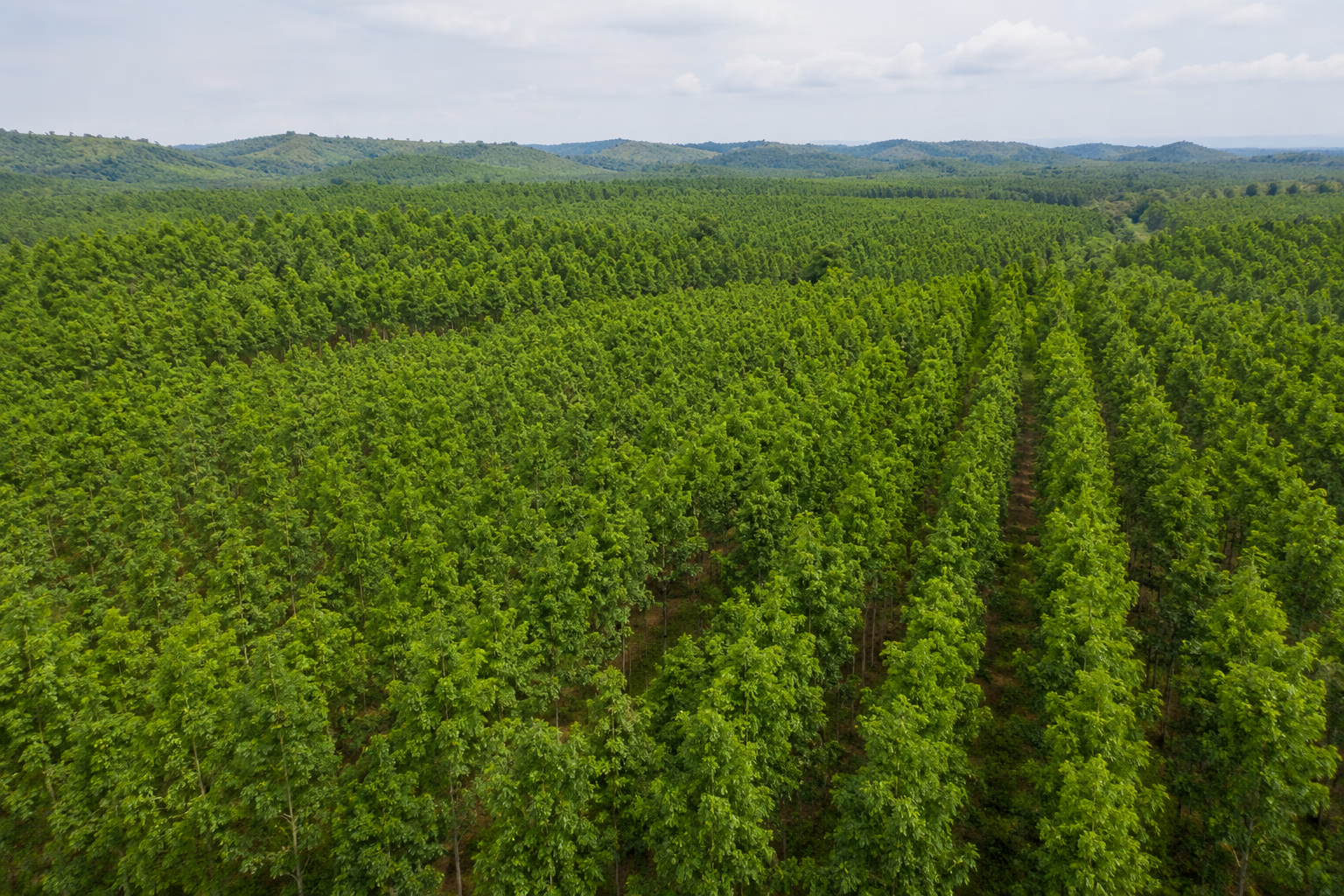
Plantation teak is grown in managed estates with controlled harvesting cycles, typically 40-60 years per rotation. Natural forest teak comes from older-growth trees in native habitats. The Indonesia Ministry of Environment reported in 2025 that 88% of Indonesia's teak production now originates from plantation forests on Java, where teak has been cultivated since the Dutch colonial era. Plantation teak offers more consistent grain, better documentation, and lower ecological impact than forest-source teak.
Is Teak Deforestation Still a Real Concern?
Deforestation from teak harvesting has declined significantly over the past decade. Indonesia reduced its deforestation rate by 76.3% between 2019 and 2024, reaching the lowest level in 25 years (Indonesia Ministry of Environment and Forestry, 2025). This improvement correlates directly with the expansion of SVLK certification, which now covers over 30 million hectares of production forest. The concern that persists involves illegal logging in unprotected areas — which is why chain-of-custody verification through SVLK's V-Legal documentation system remains essential for responsible procurement.
What Certifications Verify Sustainable Teak?
Three certification systems dominate the teak sustainability landscape, each with different scope and enforcement mechanisms. SVLK is Indonesia's mandatory legal compliance system, covering all timber exports. FSC provides voluntary third-party certification for forest management practices. PEFC endorses national certification systems globally. For most commercial buyers, SVLK certification is the baseline requirement — it is legally mandatory for Indonesian teak exports — while FSC certification represents the highest voluntary standard.
SVLK Certification
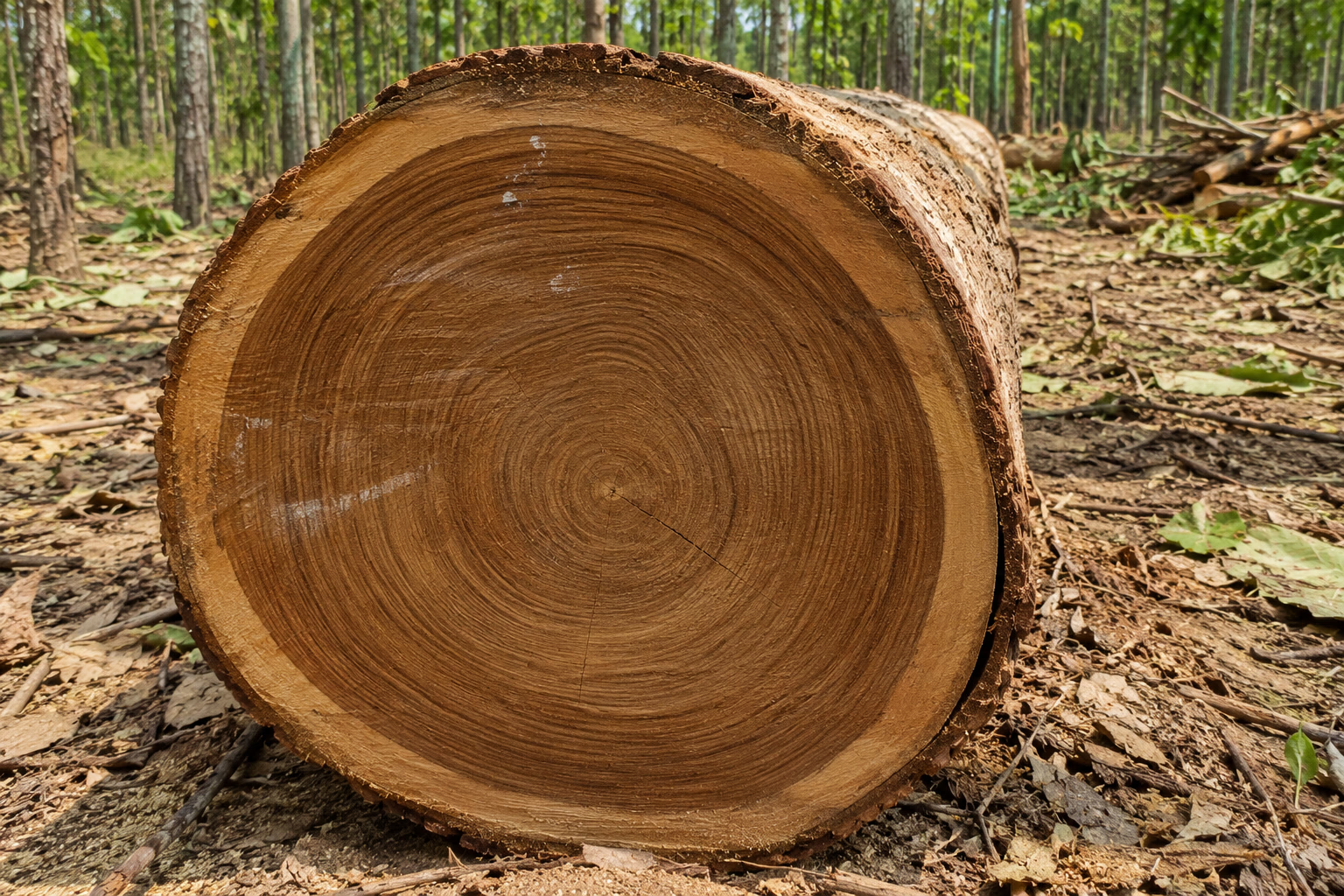
SVLK (Sistem Verifikasi Legalitas Kayu) is Indonesia's mandatory timber legality assurance system. Established in 2009, it covers 99% of Indonesia's concession forest area. Each SVLK-certified shipment carries a V-Legal document registered in the SILK online portal, which has issued over 1.5 million V-Legal documents covering exports valued at US.48 billion as of 2021 (Ministry of Environment and Forestry, SVLK Data Portal). For importers, SVLK provides legally binding assurance that the wood was harvested, transported, and exported in compliance with Indonesian law.
FSC vs SVLK — What's the Difference?
FSC focuses on forest management quality, including biodiversity protection and worker welfare. SVLK focuses on legality assurance throughout the supply chain. The two systems are complementary rather than competing. Indonesia operates a FSC National Standard that aligns with SVLK, allowing co-certification for manufacturers serving environmentally-sensitive markets such as Germany and the Netherlands. For most commercial projects, SVLK certification provides adequate legal assurance, while FSC certification adds voluntary environmental and social criteria.
See how our plantation-sourced teak meets sustainability standards →
How Long Does It Take to Grow Sustainable Teak?
Teak reaches harvest maturity in 40-60 years under plantation conditions, significantly shorter than the 80-100 years required for natural forest teak to reach comparable quality. According to the Center for International Forestry Research (CIFOR, 2023), A2-grade mature teak — the grade preferred for premium architectural applications — requires at least 40 years of growth to develop the heartwood density, oil content, and dimensional stability that distinguish teak from faster-growing hardwoods. This long rotation cycle is actually a sustainability advantage: the tree serves as a carbon sink for four to six decades before harvest.
What Is the Carbon Footprint of Teak Products?
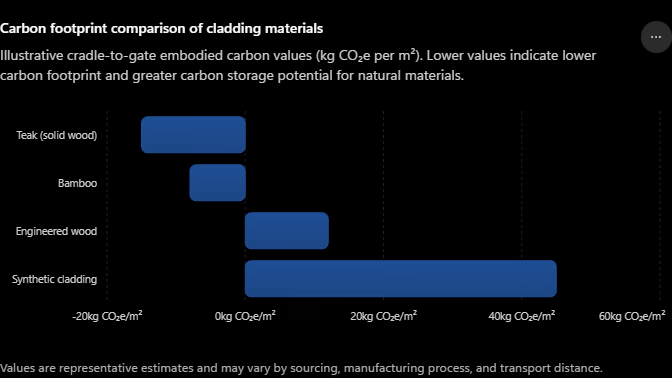
Teak's carbon story has two chapters. During its 40-60 year growth cycle, each tree sequesters approximately 1.2 tonnes of CO₂ per cubic meter of wood volume (FAO, Forest Product Conversion Factors, 2024). After harvest, teak products continue storing that carbon for their usable lifespan of 50-100 years. A teak wall panel installed today will keep roughly 60% of its biomass carbon locked away for a century. In contrast, synthetic alternatives such as PVC wall cladding emit 3.7 kg CO₂ per kg during production alone (Plastics Europe, 2023) and must be replaced every 20-30 years, releasing additional carbon through each replacement cycle.
How to Choose Responsibly Sourced Teak
Five verification steps confirm that your teak supply chain meets sustainability standards. First, request the supplier's SVLK certificate number and verify it through Indonesia's SILK online portal. Second, ask for V-Legal documents for recent shipments to confirm active compliance. Third, confirm the teak originates from plantation forests in Java rather than natural forests. Fourth, request grade documentation confirming A2 maturity rather than young A1 or B-grade wood. Fifth, for European markets, verify FLEGT licensing, which EU regulation requires for all timber imports. Direct manufacturers with transparent supply chains — like Vinteak Panels, with 25+ years of documented export experience — can typically provide all five verification steps on request.
Frequently Asked Questions
Is teak wood more sustainable than bamboo?
Bamboo regenerates faster and sequesters carbon more quickly, reaching harvest maturity in 3-5 years versus teak's 40-60 years. However, teak products last 50-100 years compared to bamboo's 10-20 year typical lifespan, making teak's lifetime carbon profile competitive. A 2023 lifecycle analysis by the Wood Products Society found that teak flooring installed in 1985 still stores 94% of its original carbon, while bamboo flooring installed the same year would have needed 3-4 replacement cycles. The choice depends on whether you prioritize rapid regeneration or long-term carbon lock-up.
Does harvesting teak contribute to deforestation?
Not when sourced from SVLK-certified plantation forests. Indonesia's deforestation rate fell 76.3% between 2019 and 2024, and 88% of teak now comes from managed plantations on Java (Indonesia Ministry of Environment and Forestry, 2025). The deforestation risk applies primarily to unprotected natural forests in Myanmar and parts of Africa. Always verify SVLK documentation to ensure your teak comes from legal plantation sources.
What is SVLK certification and is it reliable?
SVLK is Indonesia's mandatory timber legality assurance system, established in 2009 and recognized by the EU under FLEGT licensing. It covers 99% of Indonesia's production forest area and has issued over 1.5 million V-Legal documents covering exports worth US.48 billion (Ministry of Environment and Forestry). The system uses third-party auditors, making it one of the most robust legality verification frameworks in the tropical timber industry.
Can teak be considered a renewable resource?
Yes, plantation teak is a renewable resource. Teak grown in certified plantations on 40-60 year rotation cycles is replanted after harvest, maintaining forest cover and carbon sequestration capacity. The key distinction is between plantation teak (renewable, documented, low-impact) and old-growth forest teak (finite, high-impact, often illegal). Responsible buyers choose plantation-source teak with SVLK certification.