The Lifespan of Teak Flooring — What the Data Shows
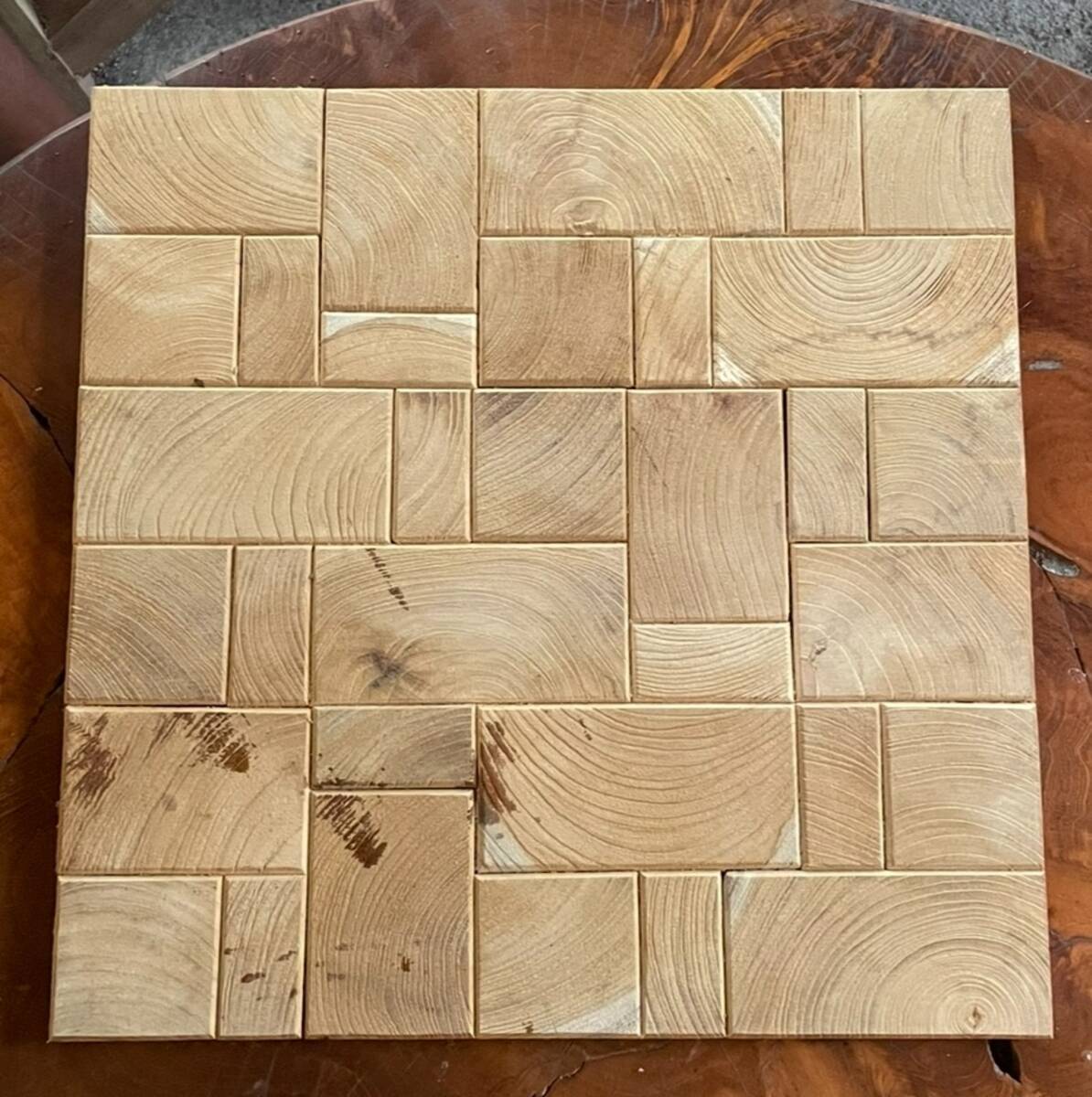
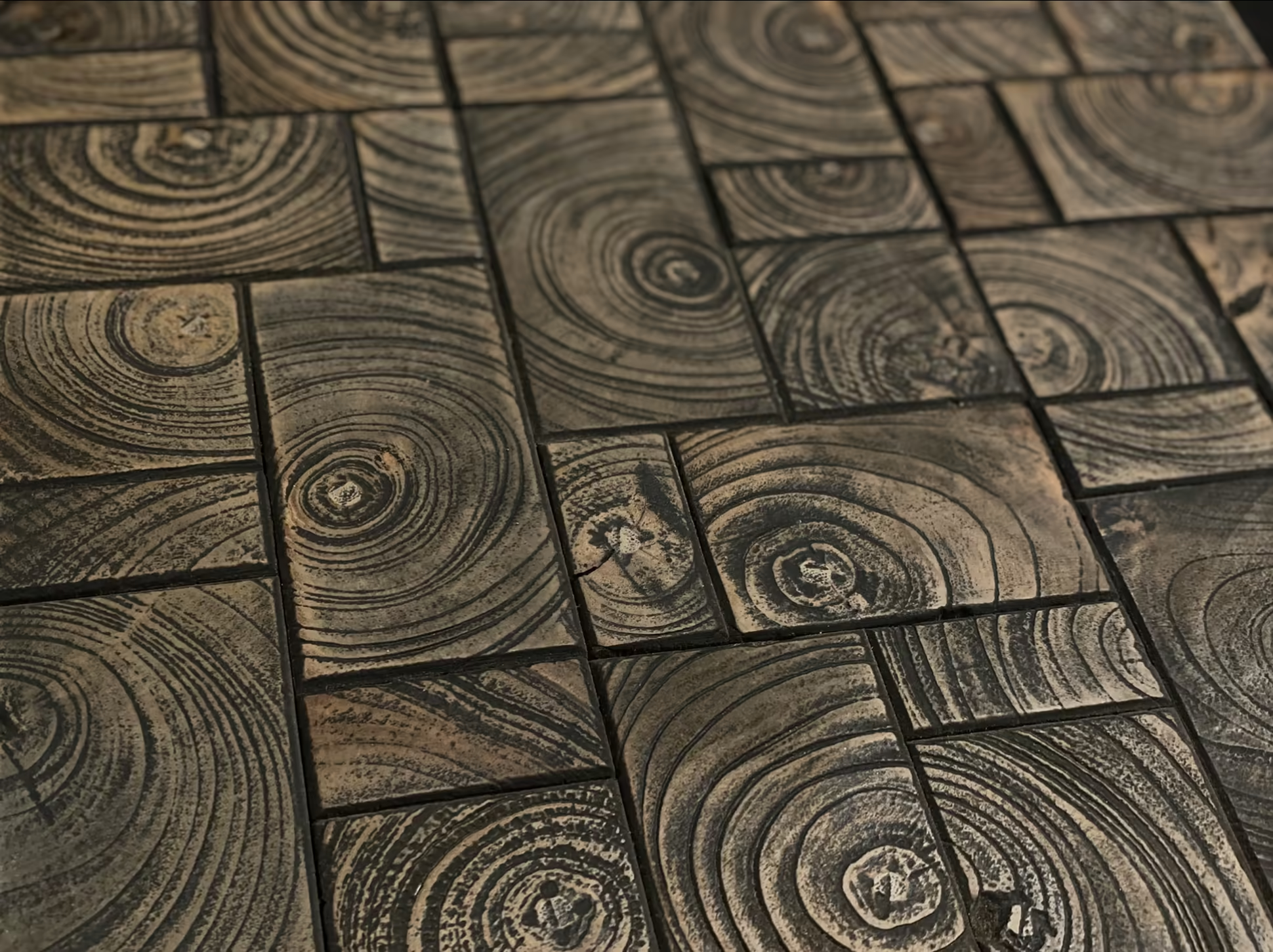
Solid teak wood flooring, when properly specified, installed, and maintained, delivers a service life of 50 to 100 years. This places teak in the highest longevity category for any hardwood flooring species. According to the USDA Forest Products Laboratory, teak heartwood is rated as very durable against decay fungi and termites, with European standard EN 350-2 classifying it in durability class 1 (very durable) — the highest rating available. For architects and building owners, this means a teak floor installed today can serve multiple generations of building occupants, outlasting the building's interior design cycles and requiring no more than periodic refinishing every 7 to 10 years to maintain its appearance.
Janka Hardness and Wear Resistance — Putting Teak in Context
Teak measures 1,000 to 1,155 lbf on the Janka hardness scale — harder than black walnut (1,010 lbf) and cherry (950 lbf), but softer than red oak (1,290 lbf) and hard maple (1,450 lbf). While this places teak in the mid-range for raw hardness, the Janka value alone does not predict flooring wear performance. Teak's high silica content — the same property that made it the preferred wood for naval ship decking — creates a naturally abrasion-resistant surface that out-performs its Janka rating in real-world conditions. The USDA notes that teak has a high blunting effect on cutting tools due to silica content, which translates in service to a surface that resists microscopic abrasion from foot traffic, dirt particles, and cleaning equipment. In practice, a teak floor in a commercial corridor with moderate foot traffic will show less visible wear over a decade than an oak floor with a higher Janka rating but no silica reinforcement.
Dimensional Stability — Teak's True Engineering Advantage
The USDA Forest Products Laboratory reports teak's dimensional movement as follows: radial shrinkage of 2.5%, tangential shrinkage of 5.8%, and total volumetric shrinkage of 7.0% from green to oven-dry condition. For comparison, red oak shrinks 4.0% radially and 8.6% tangentially (13.7% volumetric), while hard maple shrinks 4.8% radially and 9.9% tangentially (14.7% volumetric). Teak's movement in service is rated as small — the lowest category. In practical terms, this means a teak floor will exhibit roughly half the seasonal gap variation of oak, and less than half that of maple. For projects in climates with pronounced seasonal humidity changes — the heating winters of Northern Europe and Japan, the humid summers of Southeast Asia and the Eastern United States — this stability directly translates to fewer maintenance calls, reduced risk of buckling or cupping, and longer intervals between refinishing. This is also why teak is one of the few solid hardwoods recommended for installation over radiant floor heating systems.
Natural Durability — Built-In Protection
Teak's natural durability is a function of its chemical composition. The heartwood contains tectoquinone derivatives — natural organic compounds that are toxic to wood-decay fungi and termites. European standard EN 350-2 assigns teak natural durability class 1 for fungi (very durable) and class M for termites (moderately durable). The same standard assigns red oak and maple class 4 (slightly durable) for fungi — requiring chemical preservative treatment for applications where moisture exposure is a concern. Teak naturally covers use class 4 (in-ground or fresh water contact) and use class 5 (marine environment) without any chemical treatment. For flooring applications, this means teak can be installed in below-grade applications, over concrete slabs, and in moisture-prone environments where domestic hardwoods require extensive moisture mitigation systems. A teak floor installed directly over a concrete slab in a coastal property will outperform a chemically treated oak floor with an epoxy moisture barrier — because teak's protection is inherent, not applied.
Refinishing Cycles and Lifecycle Cost Analysis
Industry practice recommends refinishing solid teak flooring every 7 to 10 years in commercial settings and every 10 to 15 years in residential applications. Each refinishing cycle removes approximately 1/32 inch of surface material. A standard 3/4-inch solid teak plank can be refinished 8 to 12 times over its service life before reaching the tongue-and-groove joint. This means a teak floor can be refinished for over 80 years of commercial use or over 120 years of residential use before replacement becomes necessary. The financial implication is significant: a lower-cost hardwood floor that requires replacement every 20 years will cost more over a 60-year building lifecycle than a teak floor installed once. When factoring in demolition, disposal, subfloor preparation, and lost occupancy revenue during replacement, the lifecycle cost advantage of teak becomes even more pronounced. For building owners and developers evaluating flooring on total cost of ownership rather than initial material cost, teak is frequently the most economical choice.
Indonesian Teak and Climate Readiness
Indonesian plantation teak, sourced from the island of Java, has a documented history of performance in demanding international climates. Japanese architects and specifiers have consistently preferred Indonesian teak for its controlled moisture content — kiln-dried to 8% to 10% and conditioned to match the target climate's equilibrium moisture content. The Indonesian teak industry's experience exporting to Japan's stringent building market for over two decades has resulted in refined drying protocols and quality control systems that ensure dimensional stability in Japan's humid summers and dry winters. For projects in any climate with seasonal humidity variation, specifying teak from an experienced Indonesian producer with documented moisture management protocols is a critical factor in achieving the published lifespan and stability data.
Specification Checklist for Maximizing Teak Flooring Lifespan
Grade Selection: Specify heartwood-grade teak (Grade A equivalent) for maximum oil content and durability. Sapwood content reduces natural resistance and should be minimized in flooring applications.
Moisture Content: Verify that the teak is kiln-dried to a moisture content appropriate for the installation climate — typically 8% to 10% for interior applications in temperate climates.
Acclimation: Allow teak planks to acclimate on-site for a minimum of 72 hours before installation, in the same environmental conditions they will experience in service.
Subfloor Preparation: Ensure the subfloor is flat, dry, and structurally sound. For concrete subfloors, conduct moisture testing per ASTM F2170 before installation.
Climate Control: Maintain indoor relative humidity between 30% and 50% year-round. This is the single most important factor in preventing dimensional movement issues.
Finish Selection: Specify a finish appropriate for the traffic level and maintenance capacity of the project. Hardwax oils offer spot repairability; PU finishes offer maximum abrasion resistance.
Maintenance Protocol: Implement a documented maintenance plan including daily dry sweeping, weekly damp mopping with pH-neutral cleaner, prompt spill management, and scheduled professional inspection every 12 months.
Frequently Asked Questions
How does teak compare to oak in terms of lifespan? Solid teak flooring lasts 50 to 100 years with proper maintenance. Red oak flooring typically lasts 20 to 30 years in commercial settings before requiring replacement. Teak's natural durability and dimensional stability give it a 2:1 to 3:1 lifespan advantage over oak.
Can teak flooring last 100 years? Yes. Documented examples of teak flooring in European and Japanese buildings exceed 100 years of service. The key factors are grade selection (heartwood only), proper installation, climate control (30% to 50% RH), and scheduled refinishing.
Does teak flooring require special underlayment? Teak can be installed directly over plywood subfloors or concrete slabs. For concrete installations, a moisture vapor barrier is recommended as a precaution, though teak's natural moisture resistance provides more tolerance than other hardwoods.
Is teak flooring suitable for high-traffic commercial environments? Yes. Teak's silica-reinforced surface and refinishing capacity make it suitable for hotel lobbies, restaurant dining areas, retail spaces, and corporate reception areas. The refinishing interval will be shorter than residential (7 to 10 years versus 10 to 15 years), but the total lifespan remains 50+ years.
Conclusion
Teak flooring's 50- to 100-year service life is not marketing hyperbole — it is supported by USDA Forest Products Laboratory data, European durability standards, and centuries of documented use in demanding marine and architectural applications. For architects and building owners who specify with the long term in mind, teak offers a combination of natural durability, dimensional stability, and lifecycle value that no other hardwood species can match. Explore our teak flooring collection for detailed technical specifications.