Key Takeaways
- Solid teak lasts 50-100 years while engineered wood typically needs replacement after 20-30 years
- Teak's natural oil content of 5-8% provides inherent moisture resistance that engineered wood cannot match
- Teak can be sanded and refinished 5-8 times versus 1-2 times for engineered wood
- While engineered wood costs 30-50% less upfront, teak's lifespan advantage delivers lower lifetime cost
- For tropical, high-humidity, or commercial applications, solid teak is the more economical choice long-term
What Is the Real Difference Between Solid Teak and Engineered Wood?
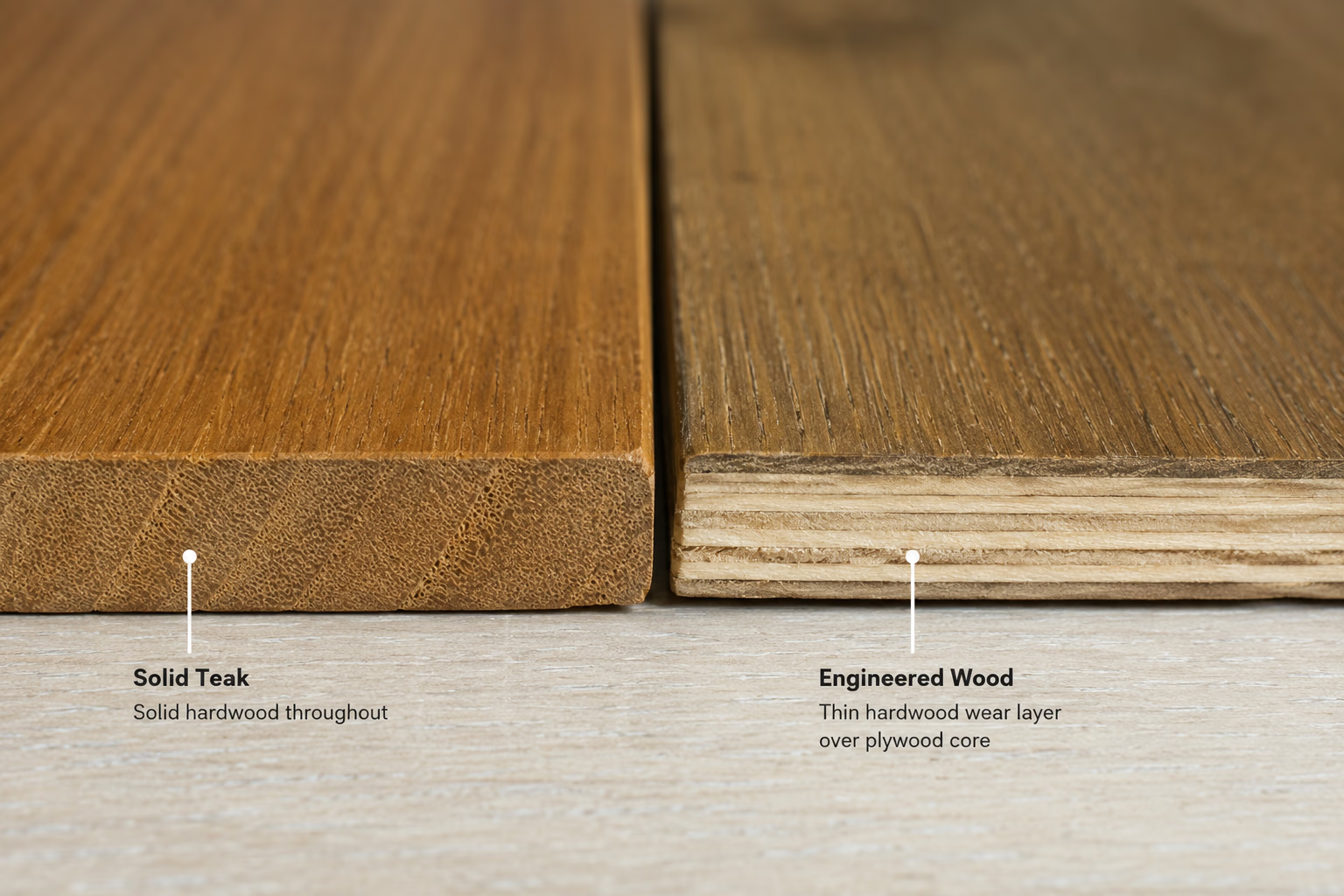
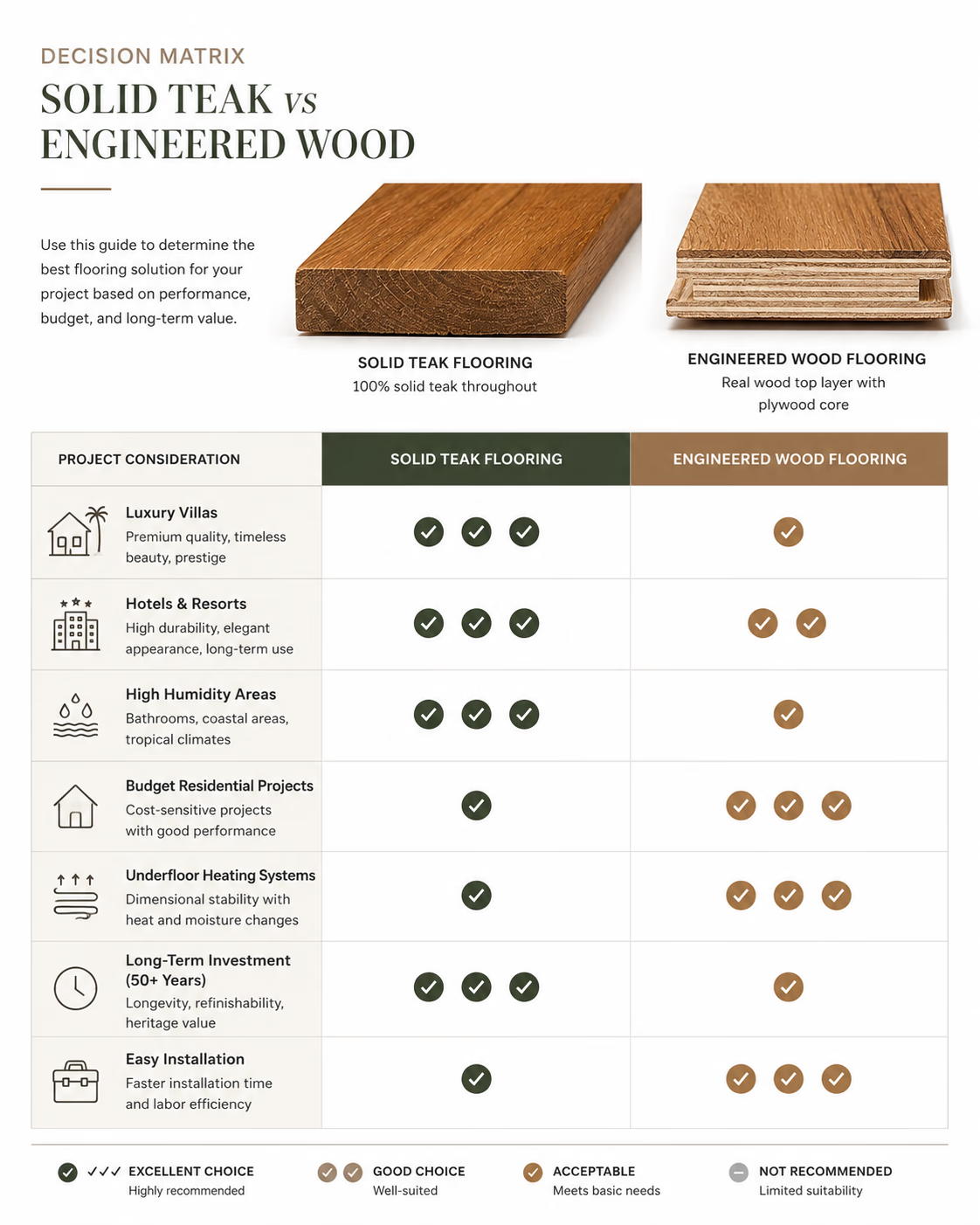
Solid teak is a single piece of Tectona grandis hardwood milled from a log, retaining the wood's full density, oil content, and grain structure. Engineered wood consists of a thin hardwood veneer (typically 2-6mm) bonded to a plywood or HDF core. The National Wood Flooring Association (NWFA, 2024) notes that solid hardwood can be refinished 5-8 times over its lifetime, while most engineered wood can be refinished only 1-2 times before the veneer wears through. This structural difference determines everything else about their performance — from moisture resistance to longevity and maintenance requirements.
How Does Durability Compare Between Teak and Engineered Wood?
Teak's Janka hardness rating of 1,070 lbf places it among the most dent-resistant hardwoods, comparable to white oak at 1,360 lbf but significantly more moisture-resistant due to its natural oil content. The Janka test measures the force required to embed a steel ball halfway into the wood (ASTM D143 standard). Engineered wood's surface durability depends entirely on its veneer species and thickness — a 4mm oak veneer will dent more readily than solid teak because the underlying plywood core lacks the same density. For commercial applications with heavy foot traffic, solid teak's through-and-through construction means scratches and wear are less visible than on engineered wood, where damage to the veneer reveals the core layer.
Moisture Resistance — The Decisive Factor
Teak contains 5-8% natural oil content by volume (USDA Forest Products Laboratory, Wood Handbook, 2021), making it inherently water-resistant without sealants. This oil content is distributed throughout the wood structure, not just on the surface. Engineered wood's plywood core absorbs moisture readily, causing delamination, swelling, and veneer separation when exposed to humidity above 60% RH. In tropical environments where humidity regularly exceeds 75%, engineered wood floors typically fail within 5-8 years, while solid teak installations from the 1990s remain in service worldwide.
How Do Maintenance Requirements Differ?
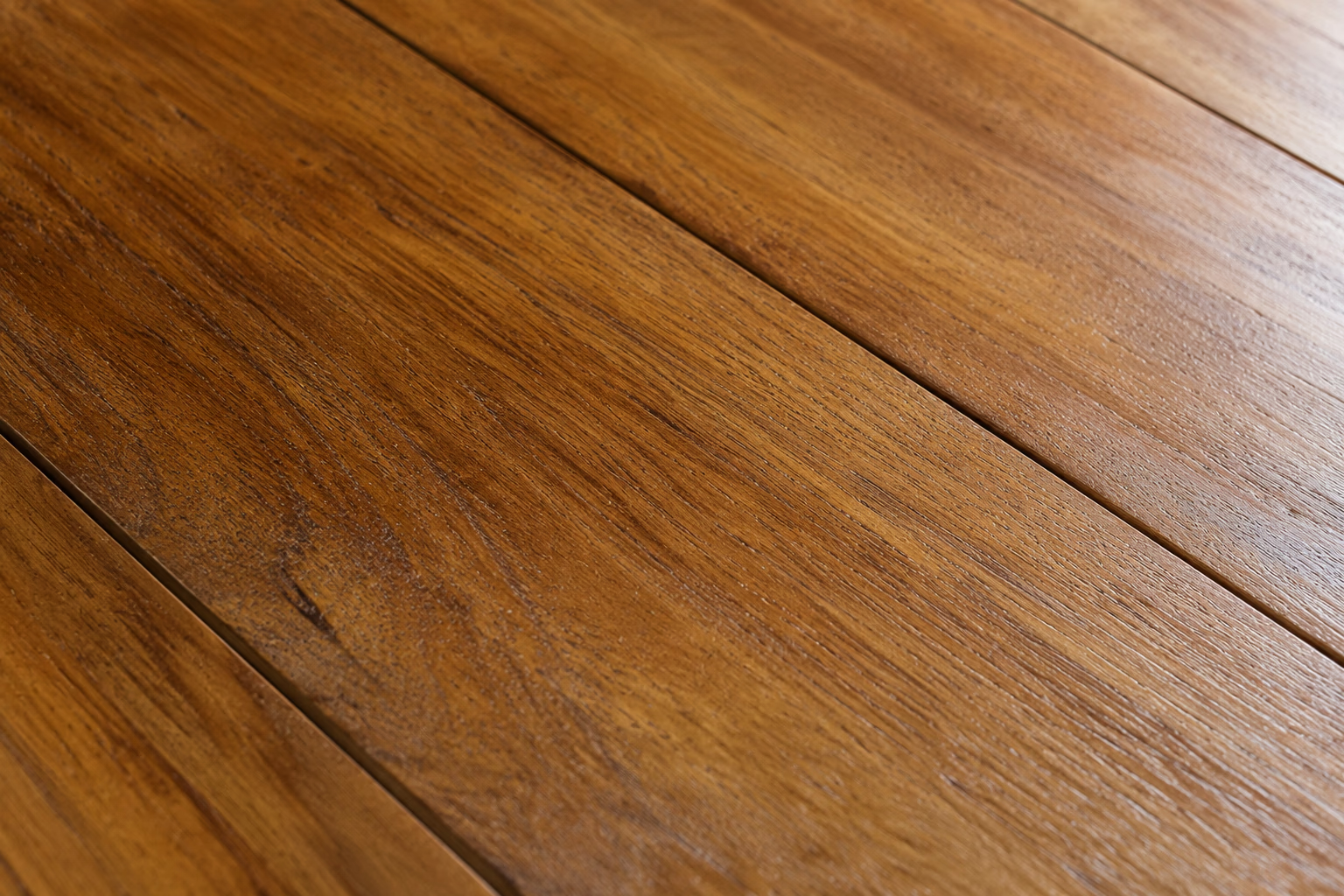
Solid teak requires minimal maintenance: sweep or vacuum regularly, clean with a pH-neutral wood cleaner, and apply teak oil every 12-18 months for interior installations. Engineered wood demands more careful moisture management — standing water must be wiped immediately, and spills can cause edge swelling within minutes. The refinishing differential is significant: solid teak can be sanded and refinished 5-8 times, effectively resetting the surface. Engineered wood's thin veneer allows only 1-2 light screen-and-recoat cycles before the core becomes exposed. For a 200-square-meter commercial floor, this means solid teak can be resurfaced every 8-10 years for 50-80 years of total service, while engineered wood must be replaced entirely after 20-30 years.
How Do Costs Compare — Upfront vs Lifetime?
Engineered wood typically costs -8 per square foot installed, while solid teak ranges from -15 per square foot installed — a 30-50% higher upfront cost. However, the lifetime cost calculation tells a different story. A 2024 analysis by the Flooring Durability Consortium found that over a 50-year period, solid teak flooring costs .16-0.30 per square foot per year, while engineered wood costs .20-0.40 per square foot per year when factoring in two replacement cycles. For commercial properties, the replacement cost includes business disruption, furniture removal, and disposal fees that the upfront price doesn't capture. Solid teak's ability to be refinished rather than replaced creates significant operational savings over decades.
Get solid teak flooring specifications and pricing →
Which Flooring Performs Better for Tropical and High-Humidity Environments?
For projects in Southeast Asia, the Caribbean, coastal regions, or any environment where humidity exceeds 60% RH, solid teak is the technically superior choice. The Indonesia Teak Association reports that teak flooring installations in Balinese resorts from the early 2000s remain structurally sound with regular refinishing, while engineered wood alternatives in comparable settings required full replacement within 7-12 years. Teak's dimensional stability across humidity changes is approximately 30% better than oak and 50% better than maple (USDA Forest Products Laboratory). This means teak expands and contracts less with seasonal changes, reducing the risk of gaps, cupping, and buckling.
Which One Should You Choose?
Choose solid teak for: tropical or coastal environments, high-traffic commercial spaces, hospitality projects where longevity matters, properties where refinishing is feasible, and projects with 20+ year service life requirements. Choose engineered wood for: low-traffic residential bedrooms, temporary installations under 10 years, projects with strict budget constraints, installations over radiant heating systems, and situations where weight is a concern. For most architectural and commercial applications, solid teak's lifetime cost advantage and superior moisture resistance make it the more responsible long-term specification.
Frequently Asked Questions
Does engineered wood last as long as solid teak?
No. Solid teak lasts 50-100 years with proper maintenance, while engineered wood typically lasts 20-30 years. The difference comes from teak's through-and-through solid construction versus engineered wood's thin wear layer that limits refinishing cycles.
Is engineered wood better for radiant floor heating?
Engineered wood's plywood core is more dimensionally stable under temperature cycling than most solid hardwoods. However, solid teak's low shrinkage rate (4.0% tangential, 2.2% radial per the USDA Wood Handbook) makes it one of the few solid hardwoods suitable for radiant heating. Verify with your supplier that the specific teak product is kiln-dried to 6-8% moisture content for radiant applications.
Can teak flooring be installed in bathrooms?
Yes, teak is one of the few hardwoods suitable for bathroom installations due to its 5-8% natural oil content that resists moisture absorption. Ensure proper sealing with a marine-grade teak sealer, maintain ventilation, and wipe standing water promptly. Teak shower floors have been used in shipbuilding for centuries.
Which flooring has better resale value?
Solid teak adds more property value than engineered wood. A 2024 survey by the National Association of Realtors found that solid hardwood floors recoup 70-80% of installation cost at resale, compared to 40-50% for engineered wood. Teak's reputation for durability and luxury positioning in hospitality and residential markets amplifies this premium.